From the forests of Lebialem to the Deng Deng–Dja landscape, ERuDeF’s Great Apes Programme is racing to protect western lowland gorillas and central chimpanzees from poaching, habitat loss, and shrinking forest corridors.
Cameroon’s East and Southwest Regions are among the last strongholds for two of Africa’s most threatened primates: the western lowland gorilla, Critically Endangered, and the central chimpanzee, Endangered. Together these regions form a vital biodiversity hotspot, sheltering some of the last significant great ape populations in Equatorial Africa.
But that status is under mounting pressure. Poaching, habitat fragmentation, agricultural expansion, and industrial logging are steadily eating into the forests these apes depend on, and the corridors that connect them.
« Every corridor we secure is a lifeline. If we lose these forests, we don’t just lose gorillas and chimpanzees — we lose one of the last places on Earth where they can still survive in the wild. This is why the work cannot wait. » — ERuDeF, Great Apes Programme
Two Landscapes, One Struggle
Two landscapes stand out for their conservation importance: the Deng Deng–Dja landscape in the East, and the Tofala Hill Wildlife Sanctuary in the Southwest, home to Lebialem’s chimpanzees. In both, forest habitat and wildlife corridors are increasingly fragmented, cutting off routes great apes need to move, feed, and find mates.
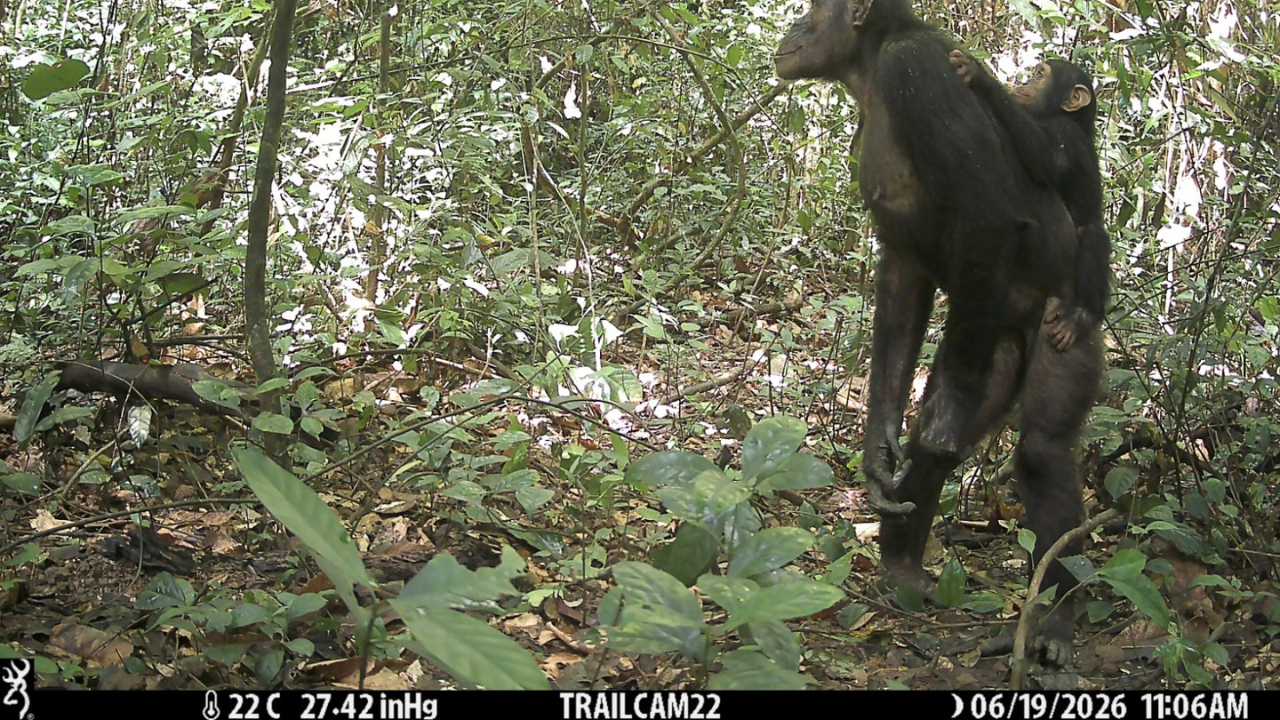
Camera traps across the Lebialem landscape continue to confirm chimpanzees moving through these forests — often mothers with infants clinging to their backs, a hopeful sign of a breeding population conservationists are determined to protect.
« Out here, you learn to read the forest — a broken stem, a snare half-hidden in the leaves. Every patrol is personal. These are the same chimpanzees we’ve watched grow up on our cameras, and protecting them is protecting a piece of home. » — ERuDeF Field Ranger, Lebialem Landscape
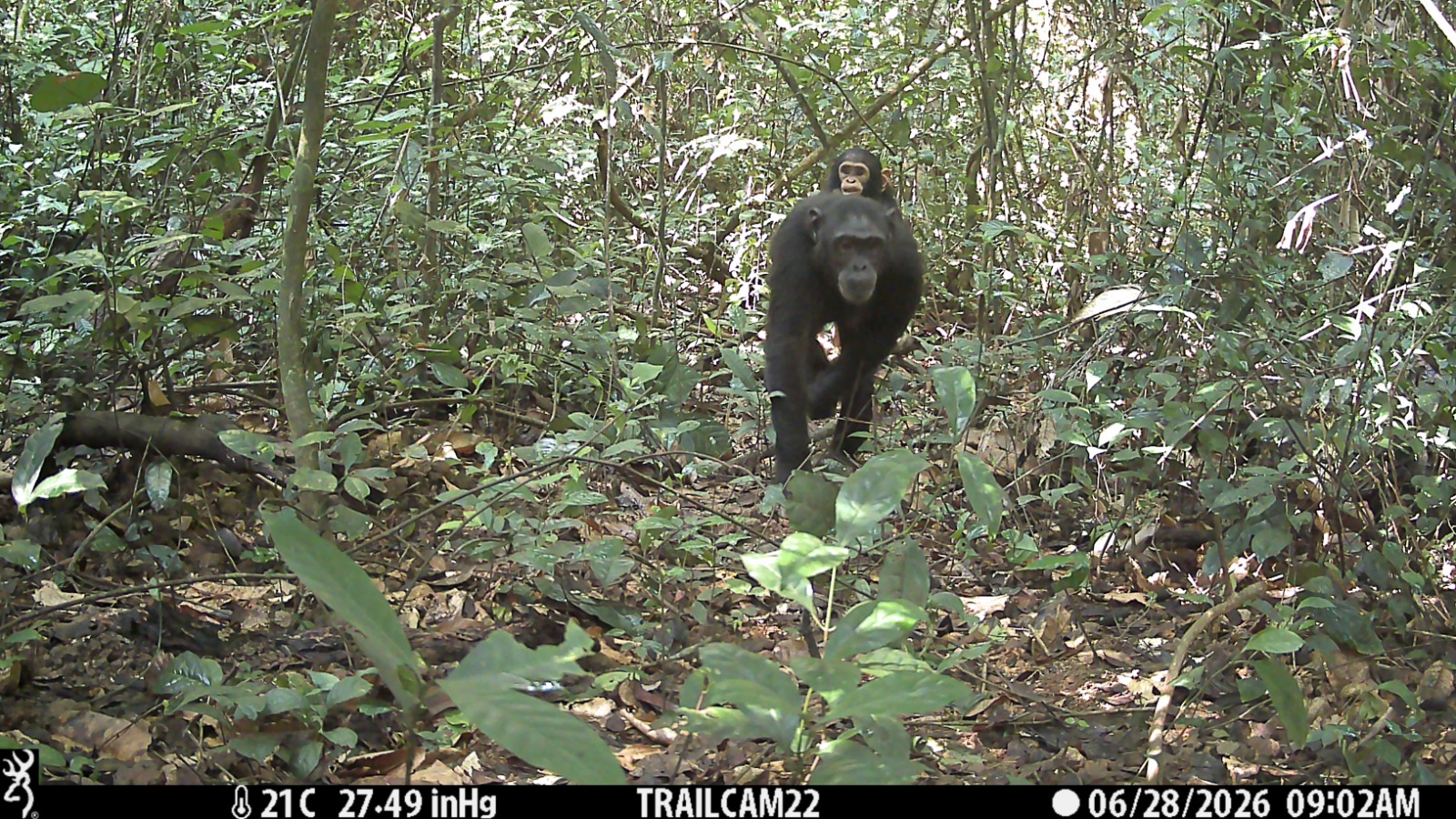
An adult chimpanzee and infant move along a forest trail in Lebialem, captured by an ERuDeF monitoring camera. © ERuDeF / Trailcam22, June 2026
A Strategy Built on Corridors, Data, and Communities
Protecting these species takes more than patrols. ERuDeF’s approach combines habitat protection, corridor management, wildlife monitoring, and community-based conservation: strengthening the management of wildlife corridors, conducting regular surveys of threatened species, reducing hunting pressure, and supporting communities with sustainable alternatives to activities that threaten wildlife.
Communities at the Centre
At ERuDeF, we believe community involvement is central to conservation. Engaging the people who live alongside great apes helps reduce pressure on natural resources while creating stronger incentives for sustainable management of the forest.
Through strengthening connectivity corridors, monitoring threatened species, reducing poaching, and working closely with communities, conservation actors are helping safeguard the great apes and the wider biodiversity of Cameroon.
A Shared Effort
ERuDeF’s Great Apes Programme works within a broader network of partners, alongside government and community stakeholders and as part of these efforts to save the great apes, ERuDeF is organizing the Lebialem Highlands Donor Conference, bringing together new and existing partners to rally greater funding and support for the protection of this critical landscape.
Amamboh Carrey Pride