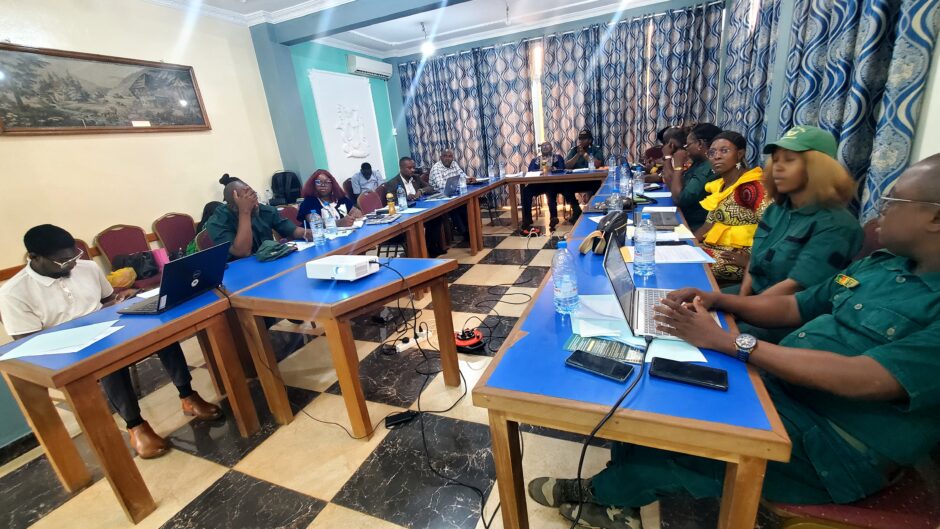
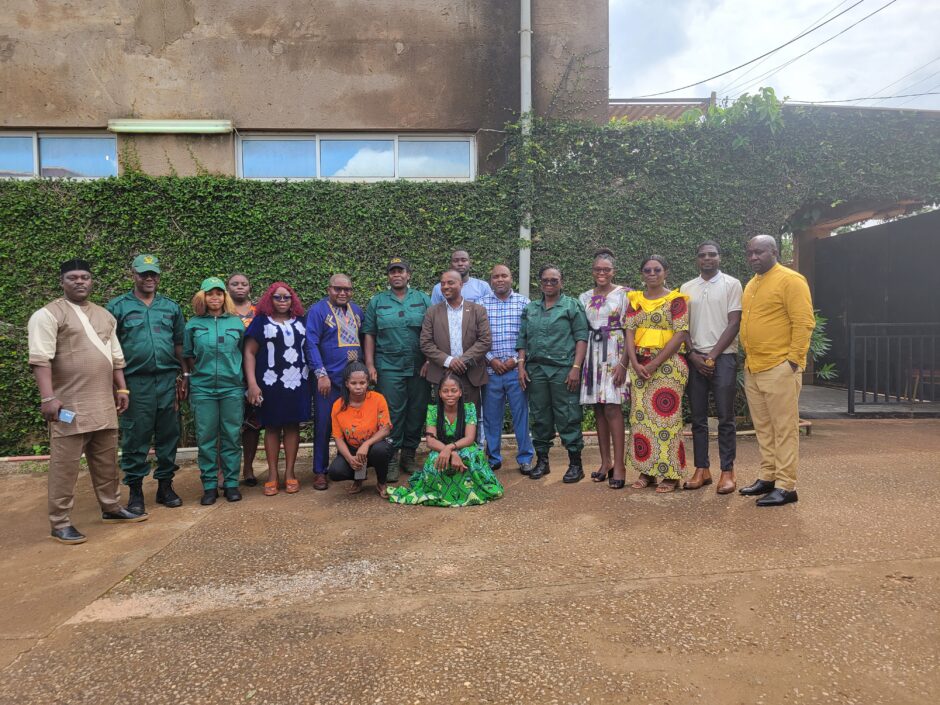
 Participants at the Deng-Deng TOU Consultation pose for a group photograph at, Nkolafamba, 16 June 2026.
Deep in the forests of Eastern Cameroon, three of Africa’s most iconic and endangered species – the Western Lowland Gorilla, Central Chimpanzee, and the Forest Elephant – are facing a quiet but deadly crisis. Isolated from the larger wildlife populations of the Congo Basin, the animals living within the Deng-Deng National Park (DDNP) risk losing the genetic diversity they need to survive. On 16 June 2026, a landmark consultation held in Nkolafamba moved Cameroon one significant step closer to addressing that crisis.
The Consultation on the Creation and Operationalization of the Deng-Deng Technical Operating Unit (TOU), organized by the Ministry of Forestry and Wildlife (MINFOF) with the support of the Environment and Rural Development Foundation (ERuDeF), brought together forestry officials, conservationists, and technical experts to chart a course for the formal establishment of the Deng-Deng TOU. Chaired by Mrs. NHIOMOG Liliane Leonie Nadia, Deputy Director of Protected Areas, the meeting represented a rare alignment of political will and scientific purpose in the service of wildlife conservation.
At the heart of the problem – and the solution – is connectivity. The gorillas, chimpanzees, and elephants of the DDNP cannot survive as isolated populations indefinitely. Without the ability to move between the Deng-Deng National Park and the Dja Biosphere Reserve, the Mbam and Djerem National Park, and ultimately the broader Congo Basin ecosystem, these animals face inbreeding, genetic decline, and eventual local extinction. The proposed TOU would formally establish and protect the wildlife corridors that make this movement possible, creating a legally recognized multi-stakeholder management framework spanning the Deng-Deng landscape.
The urgency of this protection is backed by evidence. Field surveys conducted within the Deng-Deng to Belabo Council Forest corridor have confirmed the presence of Western Lowland Gorillas, Chimpanzees, and Bongos actively using the corridor. These findings demonstrate that the wildlife is already moving – but doing so through areas that lack legal protection and are increasingly threatened by poaching, illegal gold mining, agricultural encroachment, and habitat destruction. Formalizing the TOU and its corridor network through a Prime Ministerial classification decree would give these movement routes the legal standing they urgently require.
The consultation validated two key resolutions: that the technical justification for the Deng-Deng TOU is scientifically sound, and that the roadmap for its creation – covering stakeholder mapping, land-use planning, public consultations, and divisional and regional validation commissions – has been formally adopted. ERuDeF was tasked with completing comprehensive cartographic and stakeholder mapping as the next immediate step. MINFOF was called upon to examine extending the TOU framework to also encompass the Mbam and Djerem National Park, which would further expand the protected corridor network.
For the communities surrounding the Deng-Deng National Park, the creation of the TOU also holds the promise of tangible benefits: structured participation in park governance, sustainable livelihood opportunities through conservation-compatible enterprises, and a more equitable share of the value generated by one of Cameroon’s most extraordinary natural landscapes.